
 Int’l Shipping
 Procurement
 Domestic Shipping
 Tax & Compliance
 Insights
 About Us
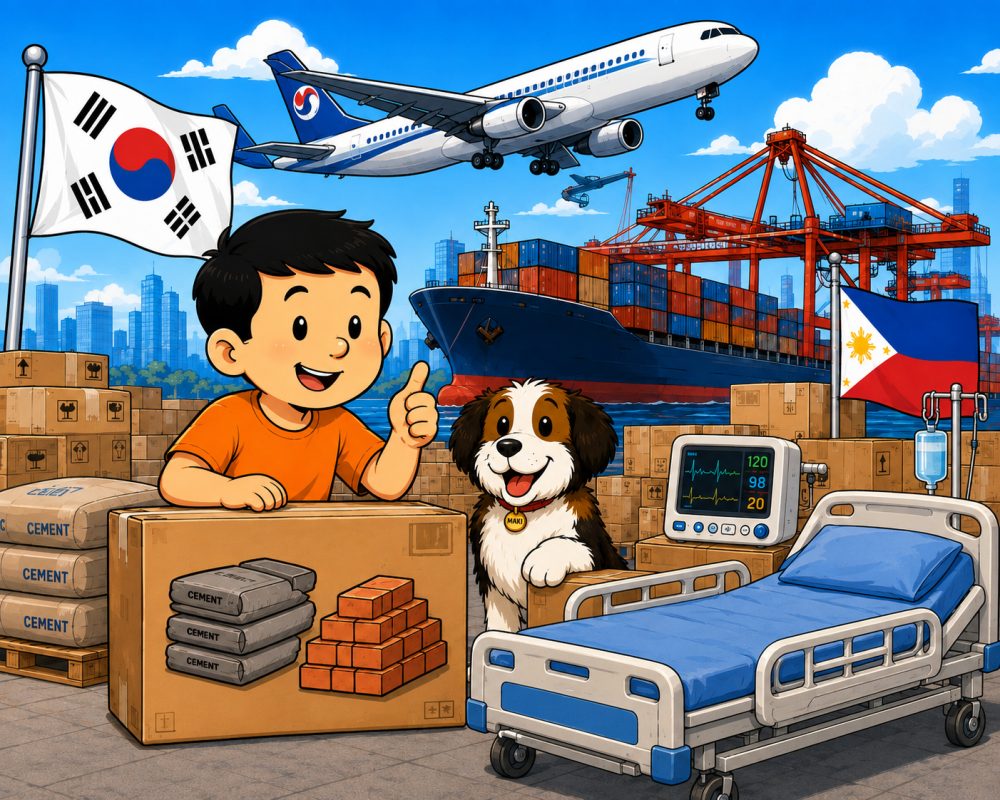
Importing construction materials and medical equipment from Korea to the Philippines can be a valuable opportunity for businesses looking for high-quality products, advanced technology, and reliable manufacturing. Korean suppliers offer a wide range of products, from steel and building materials to construction tools, hospital equipment, diagnostic devices, wheelchairs, and other medical supplies. However, successful importing requires proper supplier coordination, product verification, shipping arrangements, and an understanding of Philippine customs and regulatory requirements.
The import process typically begins with selecting a reliable Korean supplier, confirming product specifications and pricing, and preparing the necessary commercial and shipping documents. Businesses can choose between sea freight for heavy, bulky, or large-volume construction materials and air freight for smaller or time-sensitive medical equipment. Depending on the product, additional permits or certifications may be required in the Philippines. Working with an experienced logistics partner can help coordinate supplier pickup, international shipping, customs clearance, and final delivery, making the entire Korea-to-Philippines importing process more organized and efficient.
Got something to move?
Fill up the form below or call us.
Frequently Asked Questions
What construction materials can I import from Korea to the Philippines?
You can import a wide range of legal construction materials, including steel products, pipes, roofing materials, tiles, cement-related products, tools, electrical components, building fixtures, and construction equipment. Specific products may be subject to Philippine standards, permits, or regulatory requirements.
What medical supplies can I import from Korea?
Medical supplies and equipment may include hospital beds, wheelchairs, diagnostic equipment, monitoring devices, surgical supplies, protective equipment, and other healthcare products. Requirements can vary depending on the specific product, so it is important to check whether additional Philippine regulatory approvals or permits are needed.
Do I need a permit to import medical supplies from Korea?
Some medical devices and healthcare products may require registration, permits, or other regulatory documentation before they can be imported and distributed in the Philippines. The requirements depend on the type, intended use, and classification of the product.
What documents are needed when shipping from Korea to the Philippines?
Common shipping documents may include the commercial invoice, packing list, bill of lading or air waybill, certificate of origin when applicable, and other documents required by Philippine Customs and relevant government agencies. Additional permits or certificates may be required for regulated construction or medical products.
Should I choose air freight or sea freight from Korea to the Philippines?
Air freight is generally suitable for smaller, urgent shipments because it offers faster transit times. Sea freight is usually more economical for large, heavy, or bulky construction materials and equipment, while medical supplies may benefit from air freight when speed is important.
Can you ship heavy construction materials from Korea?
Yes. Heavy and oversized cargo can be shipped from Korea to the Philippines using appropriate sea freight or specialized cargo services. The shipping method depends on the cargo’s weight, dimensions, packaging, and destination.
Can I import small quantities or samples from Korea?
Yes, depending on the product and applicable regulations. Small shipments can be arranged for samples, initial orders, or business testing, although regulated medical products may still require the appropriate documentation regardless of shipment size.
How long does shipping from Korea to the Philippines take?
Transit time depends on the shipping method, origin and destination ports or airports, cargo type, and customs processing. Sea freight generally takes longer but is more cost-effective for large shipments, while air freight provides faster delivery.
Can you handle customs clearance in the Philippines?
Yes. An experienced freight and import partner can assist with customs documentation, shipment coordination, assessment of applicable requirements, and delivery after customs clearance.
How much does it cost to import construction materials and medical supplies from Korea?
The total cost depends on the product, quantity, cargo dimensions and weight, shipping method, origin, destination, customs duties and taxes, permits, and delivery requirements. Requesting a detailed quotation before shipping can help you estimate the complete landed cost.
Can you arrange pickup from my Korean supplier?
Yes. A logistics provider can coordinate with your Korean supplier, arrange cargo pickup, consolidate shipments when appropriate, and organize transportation to the Philippines.
How can I make importing from Korea to the Philippines easier?
Start by confirming your supplier and product specifications, checking applicable Philippine import requirements, preparing accurate documentation, and choosing the right shipping method. Working with a logistics partner that can coordinate supplier pickup, international freight, customs clearance, and final delivery
Ready to get started?
Fill up the form above or call us.
We’re open Monday to Friday, 9am to 5pm.
