
 Int’l Shipping
 Procurement
 Domestic Shipping
 Tax & Compliance
 Insights
 About Us
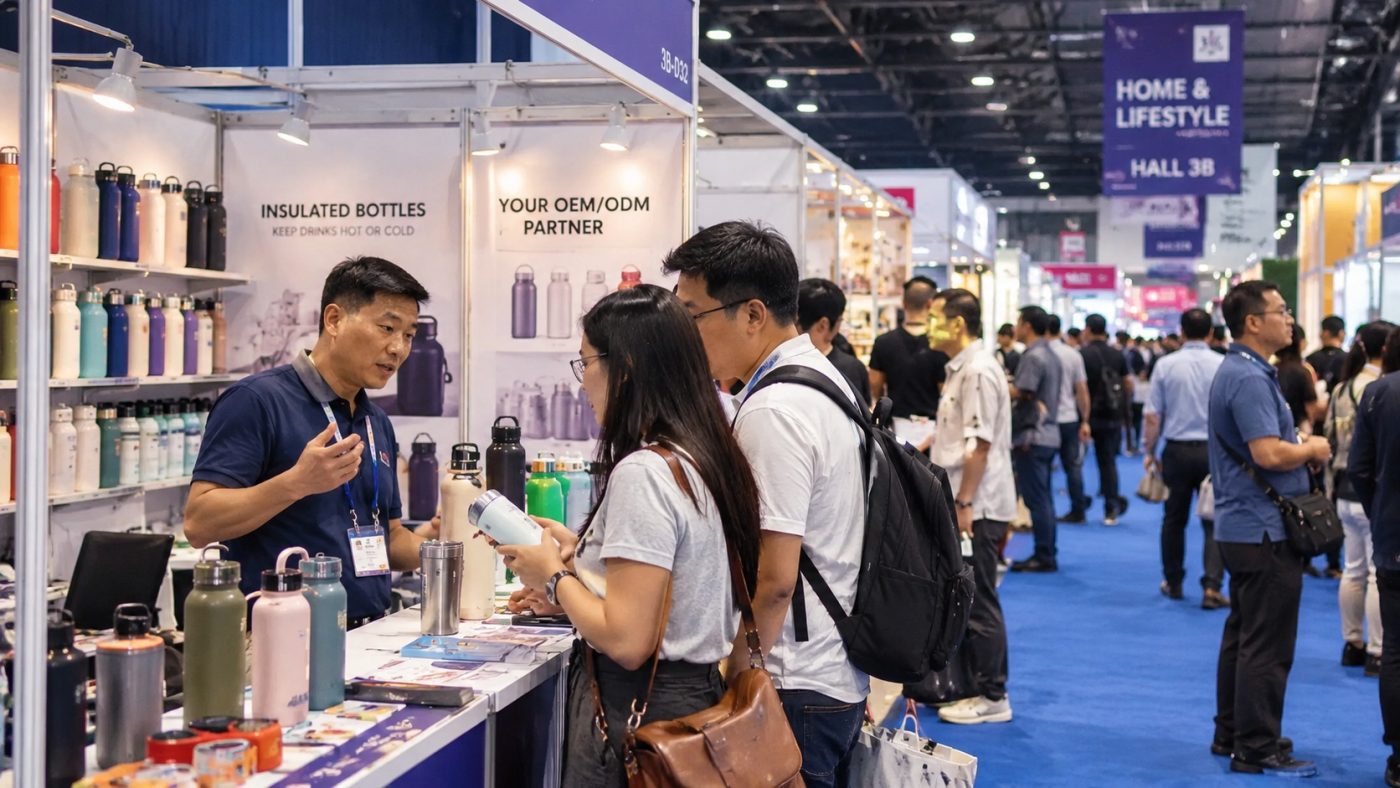
When buying products from overseas, you’ll often come across two types of suppliers: factories and trading companies.
Factories make the products themselves, while trading companies typically purchase goods from manufacturers and sell them to customers.
Many business owners assume buying directly from a factory is always cheaper and better. But that’s not necessarily true.
Depending on what you’re buying, how much you need, and how often you order, a trading company might actually be the better choice.
Let’s Simplify…
Imagine you run a business in the Philippines and want to import 500 customized water bottles.
You find a factory in China selling them for ₱80 each. Sounds good! But there’s a catch: the factory requires you to order at least 3,000 pieces.
Then you find a trading company selling similar bottles for ₱100 each, with a minimum order of just 300 pieces.
The factory is cheaper per bottle, but you’ll have to spend much more upfront.
The trading company costs more per piece, but you can start small and avoid being stuck with thousands of bottles you might not sell.
That’s the basic difference.
Factories are often better for large, regular orders. Trading companies can be more practical for smaller purchases or businesses buying different products.
Why This Is Important
Choosing the wrong supplier can cost your business more than you expect.
Here’s how the two options generally compare:
| Factor | Factory | Trading Company |
|---|---|---|
| Price per unit | Often lower | Often higher |
| Minimum order | Often larger | Sometimes smaller |
| Customization | More direct control | Depends on manufacturer |
| Product selection | Usually specialized | Often wider |
| Communication | Direct with manufacturer | Through intermediary |
| Quality control | Easier production access | Depends on arrangements |
Of course, these aren’t fixed rules. Some factories accept small orders, while some trading companies offer better pricing because of their purchasing volume.
The important thing is to compare the total cost, product quality, order requirements, and reliability, not just the price shown in a quotation.
Is Buying Directly from a Factory Always Cheaper?
Not always.
Factories may offer lower prices per piece because there’s no reseller adding a markup.
But they might also require larger orders, charge for molds or product development, or expect you to arrange shipping and other services yourself.
For example, saving ₱10 per item isn’t necessarily a good deal if you must purchase 5,000 pieces when you only need 500.
Before deciding, ask for the total cost based on the quantity you actually need, including any additional charges.
When Should I Consider Buying from a Trading Company?
A trading company can be useful when you’re starting small or purchasing several different products.
For example, imagine you’re opening a restaurant and need plates, kitchen equipment, packaging and furniture.
Finding a separate factory for every item could take weeks.
A capable trading company might help you purchase several products through one contact, making the process easier to manage.
However, you should still check who manufactures the goods, how quality is handled, and who takes responsibility if something goes wrong.
How Do I Know Which Supplier Is Right for My Business?
Start by asking yourself three questions:
-
How many pieces do I actually need?
-
Do I need a standard product or something customized?
-
Can I confidently evaluate and manage an overseas supplier?
If you’re buying large quantities of one product regularly, a factory may be the better option.
If you’re testing a product, buying smaller quantities, or sourcing several items, a trading company may be more convenient.
Either way, request samples, verify the supplier’s business details, and make sure product specifications and payment terms are clear before placing a significant order.
Let Us Find the Right Supplier for Your Business
Finding a supplier overseas is easy enough. Finding the right one for your business takes more work. At ImportAnything.ph, our Procurement On Demand service helps businesses find potential manufacturers and suppliers, compare quotations, review product specifications, arrange samples, and coordinate purchases. Whether you’re looking for a factory that can manufacture products to your specifications or a trading company that can supply smaller quantities, we’ll help you explore practical options based on your needs and budget. We can also help coordinate international shipping, customs clearance, and delivery to the Philippines, giving you one team to work with from sourcing to shipment.
Have something you need to purchase from overseas? Put our procurement team to work. Tell us what you’re looking for, how many you need, and any specifications you have in mind. Your dedicated ImportAnything.ph representative can help research potential suppliers, compare your options, and work with you through the purchasing and shipping arrangements. Instead of spending your time contacting dozens of overseas companies, let us handle the legwork so you can focus on running and growing your business. Tell us what you need. We’ll start the research.
Sources
-
Alibaba.com — Evaluating Supplier Capacity and Payment Terms for Large-Scale Procurement. Discusses factory and trading-company sourcing, order quantities, quality control and supplier capabilities.
-
International Chamber of Commerce — Guide to Responsible Sourcing. Covers important supplier-selection considerations, including cost, product quality, delivery reliability and business integrity.
-
Trade Commissioner Service of Canada — Preparing to Go to Market. Explains the role of intermediaries and the importance of choosing suitable business partners.
